
How to Stop Dog Nipping When Getting Cockaburs Cut Off
By: David Codr
Published Date: November 13, 2020
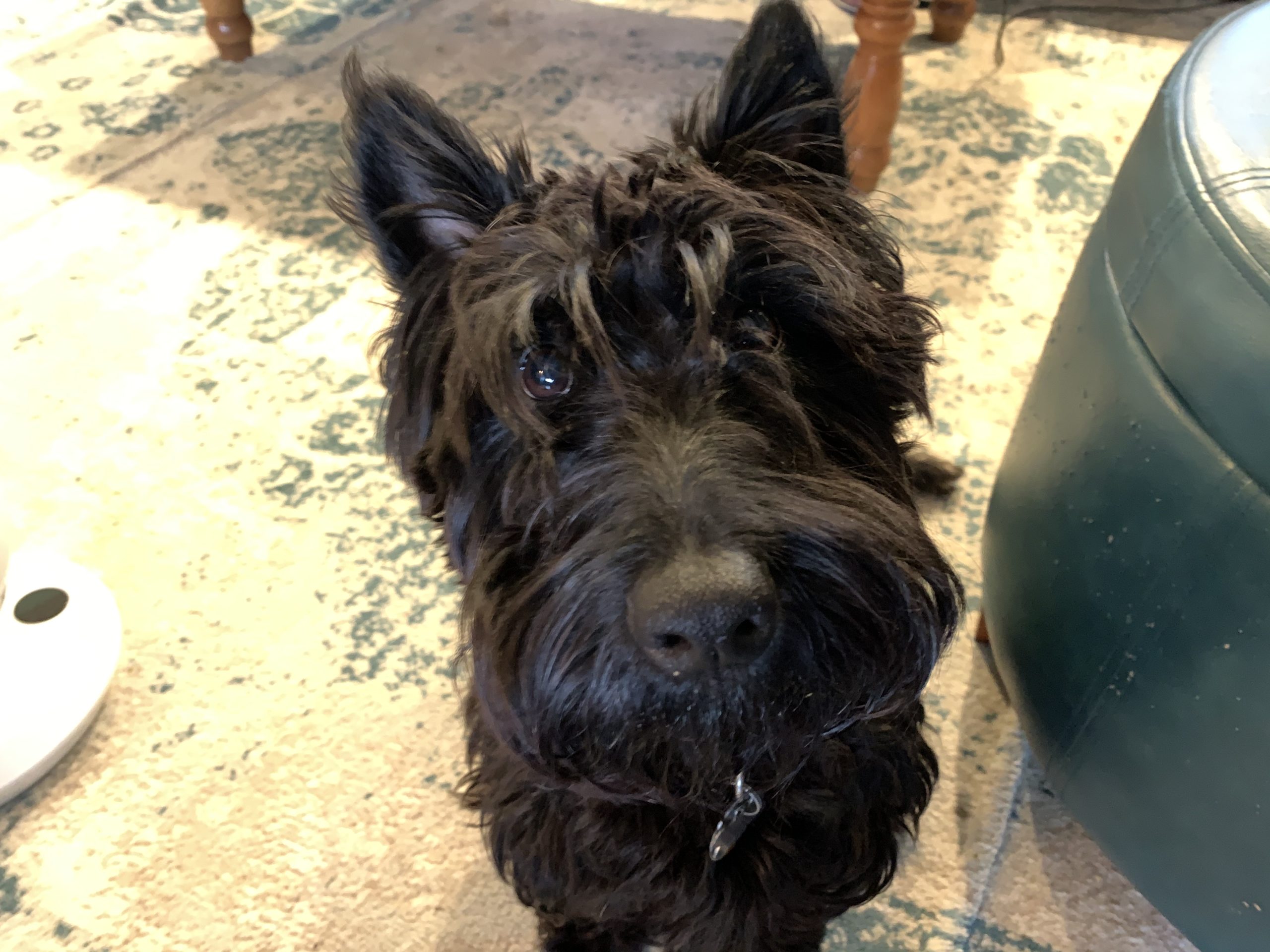
For this Waterloo dog training session worked with Abby, a 3 year-old Scottish Terrier. Abby’s family reached out to us to see if we could help with a number of her fears. She is afraid of bicycles and barks at unknown dogs. She also has a habit of nipping when getting cockaburs cut off her coat.
Abby looked very anxious when we first arrived for her session. She didn’t bark, her ears were back, and her tail was tucked. She stayed on the other side of the room and was jittery; jumping at unknown sounds and not taking treats.
As we answered her guardian’s questions and shared tips about dog behavior, Abby grew curious. We were giving her space and ignoring her, allowing her to come to us at her own pace.
If you have an anxious dog, giving them time and space to approach on their own is really helpful and important. Once she started wandering the room a bit and her body language looked more at ease, I tossed treats on the floor.
It didn’t take long for her to start taking treats from my hand or jumping up on the couch to hang out.
Easy Way to Stop a Dog From Nipping When Getting Cockaburs Cut Off
One of the recurring issues the guardians had was Abby nipping when getting cockaburs cut off her coat.
Living in an area with plenty of these pesky weeds, this was an issue that happened fairly often. Abby tried to move away and when that didn’t work, she started nipping and biting people when they tried to cut off the cockaburs. Anytime a dog is biting you when you are trying to interact with them, is a warning that the dog disagrees or is uncomfortable with what you are doing.
But because the guardians wanted to help her not be in discomfort, they kept trying which caused the bites to get worse.
Many dogs dislike being groomed, as it can feel invasive. In this case, the area was likely already irritated from the dog’s own attempts to remove the cockaburs, making the human’s efforts even more uncomfortable. This, in turn, heightened the dog’s discomfort—creating a cycle of frustration, both for the dog and the person trying to help.
But if you go slow and use the right approach, you can help your dog learn to like being groomed. I shot a video on tips to groom your dog or cut out cockaburs that you can check out below.
This is an easy way to stop a dog from biting when you cut off cockaburs.
When training a dog to handle different interactions, it’s important to move at their pace. Make sure the experience is positive. In some cases, dogs may react negatively to necessary but uncomfortable interactions, such as removing cockaburs from their fur.
For example, a dog might bite if their guardian tries to remove burrs. This process can cause irritation and discomfort. Even when done carefully, pulling out a burr can be uncomfortable for a dog. If a dog turns their head, lowers it, or backs away, it shows they are not happy with what is happening.
Help a Dog Become More Comfortable with Handling
To help a dog become more comfortable with handling, it’s crucial to pay attention to body language. A relaxed posture, ears up, and willingness to take treats are good indicators that the dog is feeling at ease.
If a dog leans slightly away or hesitates, it signals some level of discomfort, and their comfort zone should be respected. The goal is to create a positive association with touch by pairing it with rewards.
For example, reaching out to the dog and giving a treat helps them link the action to something good. If they remain relaxed, the process can be gradually progressed by touching different areas, always rewarding calm behavior.
This conditioning should be done in small steps, ensuring the dog is comfortable at each stage before moving forward. Start with light touches using one finger. Then, use two fingers. Finally, gently grasp the fur.
Over time, the dog learns that these interactions are not harmful and even lead to rewards. This method is very helpful for getting dogs used to grooming tasks. This includes handling their paws for nail trimming.
If a dog reacts negatively to grooming tools like scissors, introducing them in a non-threatening way can help. Simply making the sound of scissors and pairing it with treats can reduce anxiety.
Slowly, bring the scissors closer to the dog. You can make light contact before starting to trim or remove burrs. By breaking the process into smaller steps, the dog learns that each stage is safe. This helps them become more cooperative over time.
The key to success is patience and attentiveness to the dog’s signals. If a dog growls, turns their head, or moves away, it is expressing discomfort, and pushing past these signals can lead to defensive behaviors like biting.
Respecting boundaries, working slowly, and giving positive feedback will help create a more cooperative and relaxed experience. Whether trimming nails, removing burrs, or handling a sensitive dog, these techniques make the process smoother and more enjoyable for both the dog and the guardian.
If the guardian does this exercise a few times each day, they will get better at it. They should practice in different places and at different times. This will help them remove real cockaburs in the future.
We didn’t have time to work on Abby’s fear of bicycles. Our main focus was to stop her from biting when we removed the cockaburs. We also wanted to help her enjoy visits from the grandkids. I’d like to return to work on the fear of bicycles sometime in the spring.
We shared a number of other dog behavior tips in this in-home dog training session. To help the guardians remember them all, we recorded a roadmap to success video that you can check out below.
Want to Help a Dog Become More Comfortable with Handling and Grooming? Click Here to Book a SessionCategorized in: Dog Behavior