


Helping a Whippet mix Learn to Stop Reacting to Dogs Passing by his House
By: David Codr
Published Date: September 22, 2020
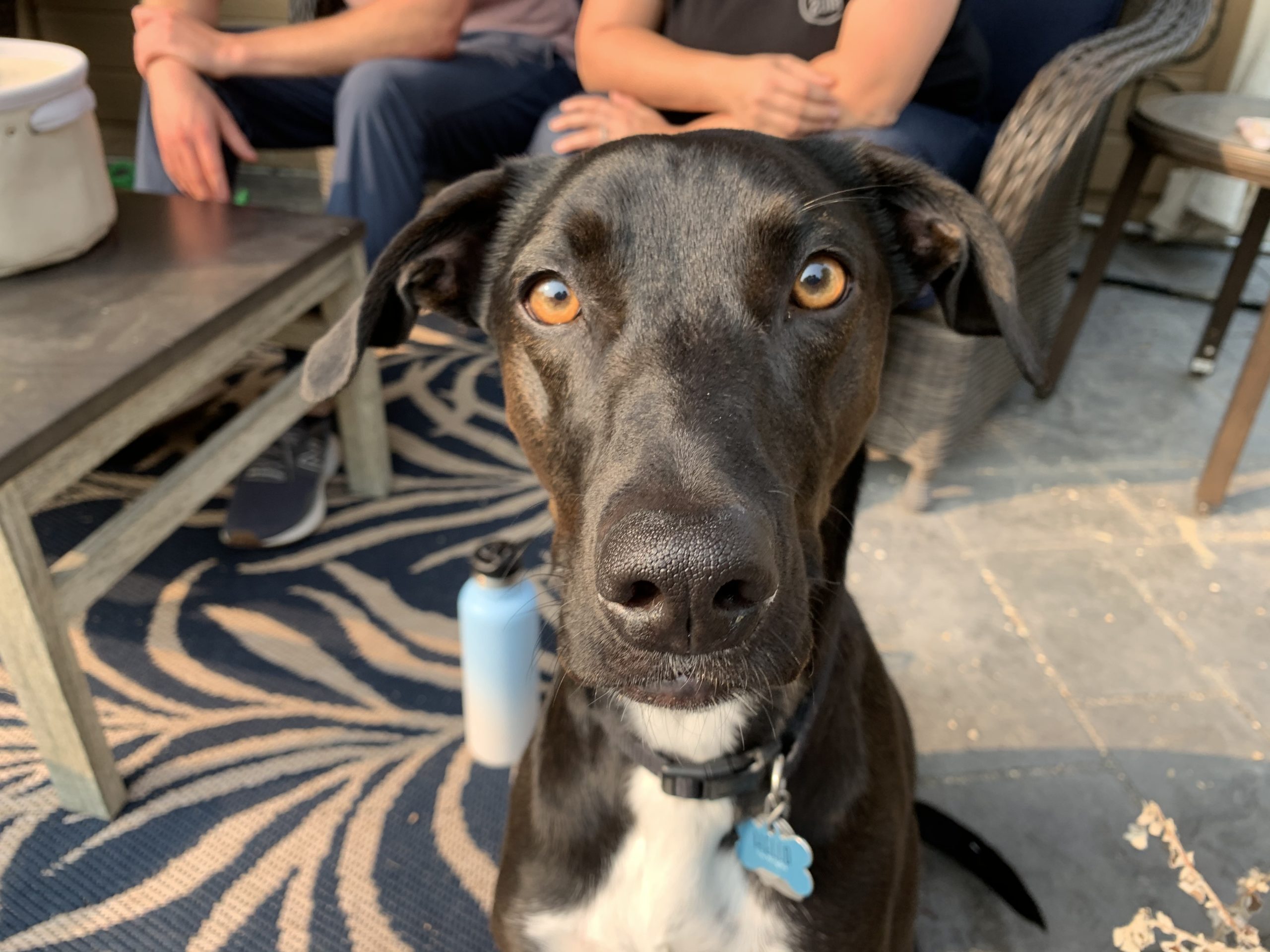
For this Omaha dog training session we helped 3 year-old Whippet mix Wrigley who has a habit of barking and charging after some dogs she doesn’t know.
Wrigley shares a yard with a Weimeraner with both dogs contained by an electric fence. Well sorta. Wrigley has run through the fence a few times which can happen. And when it does, it reduces the effectiveness of the fence as the dog is more likely to run through it again since they were successful the last time.
Since electric fences work by a punishment principle, that falls into the category of aversive training. I dont practice aversive training methods as they often result in unwanted behavior influencers due to the production of cortisol, the stress hormone, in the dog’s blood. This can cause stress and anxiety in the dog which usually makes matters worse. I could immediately see that both dogs had cortisol in their blood by how twitchy and jumpy their movements were.
Wrigley was giving signals that she wasn’t sure of my presence, so I gave her space and waited for her to come to me. It took about 20 minutes of ignoring her before she was relaxed enough to approach me and take treats. The guardians should have future guests follow this same protocol.
I went over a number of structural changes that can help reduce Wrigley’s stress levels. Helping the dog gain confidence that his humans are controlling situations will go a long ways towards helping the dog relax and stop the barking, lunging and reactive behavior.
A great way to stop a dog from acting aggressive to other dogs is to build up positive associations with dogs. The guardian arranged to have a friend drop by with thier dog 3/4 of the way through the session. When they got there, I handed my camera to Wrigley’s guardian so she could record me sharing tips to help a dog stop acting aggressive to other dogs. You can learn 2 secrets to stopping aggressive dog behavior by watching the free positive dog training video below.
It was great to see how well Wrigley responded. But its important to note that we set her up for success; she had her energy drained by the 3 hour session and met the other dog in a staggered / controlled way with both dogs on leashes. Leashes can be problematic as a tight leash can activate a fight or flight response, but if you read the dog well and keep the leash loose, they are good tools to keep everyone safe.
Teaching a dog to stop lunging and biting other dogs is all about managing the situation. You need to learn how to read your dog’s body langauge and get it out of situations at early signs of distress. If you wait for it to be reactive, you waited to long. This is one of the biggest mistakes people have when they are working with a fearful or reactve dog.
Since the greeting went so well, we went on a short walk with Walker to build on our success. This is a goal for the guardians to aspire for with all the dogs Wrigley has reacted to in the past. The more the dog sees other dogs in a positive way or association, and eventually walks with them, the more positive an outlook the dog will have with other dogs.
It was awesome to see Wrigley walking with this neighbor dog while totally relaxed. This is the exact kind of positive dog dog interation Wrigley needs to stop his aggressive dog behavior for good.
Im not a huge fan of leash teathers, but since the guardians have one in the back yard, it may be a good tool to utilize as it will prevent her from seeing dogs passing by. The more she sees and barks or reacts to dogs passing the front of the house, the more she will. So preventing that behavior and type of interaction needs to be high on the priority list.
But the opposite is also gloriously true. The more positive experiences he has with unknown dogs, the less likely she will be in the future. So creating situations where the humans are ready to work with her is the name of the game. I mentioned doing some click for looks training which can really help provided the guardians have enough distance between Wrigley and the other dog so its not reacting at all.
To help the guardians remember all the dog behavior tips we shared in this in home Omaha dog training session, we filmed a roadmap to success video that you can check out below.
Categorized in: Dog Behavior