


Helping a Pair of Badly Abused Dogs with Kennel Training and Teaching them to Stay
By: David Codr
Published Date: January 22, 2017
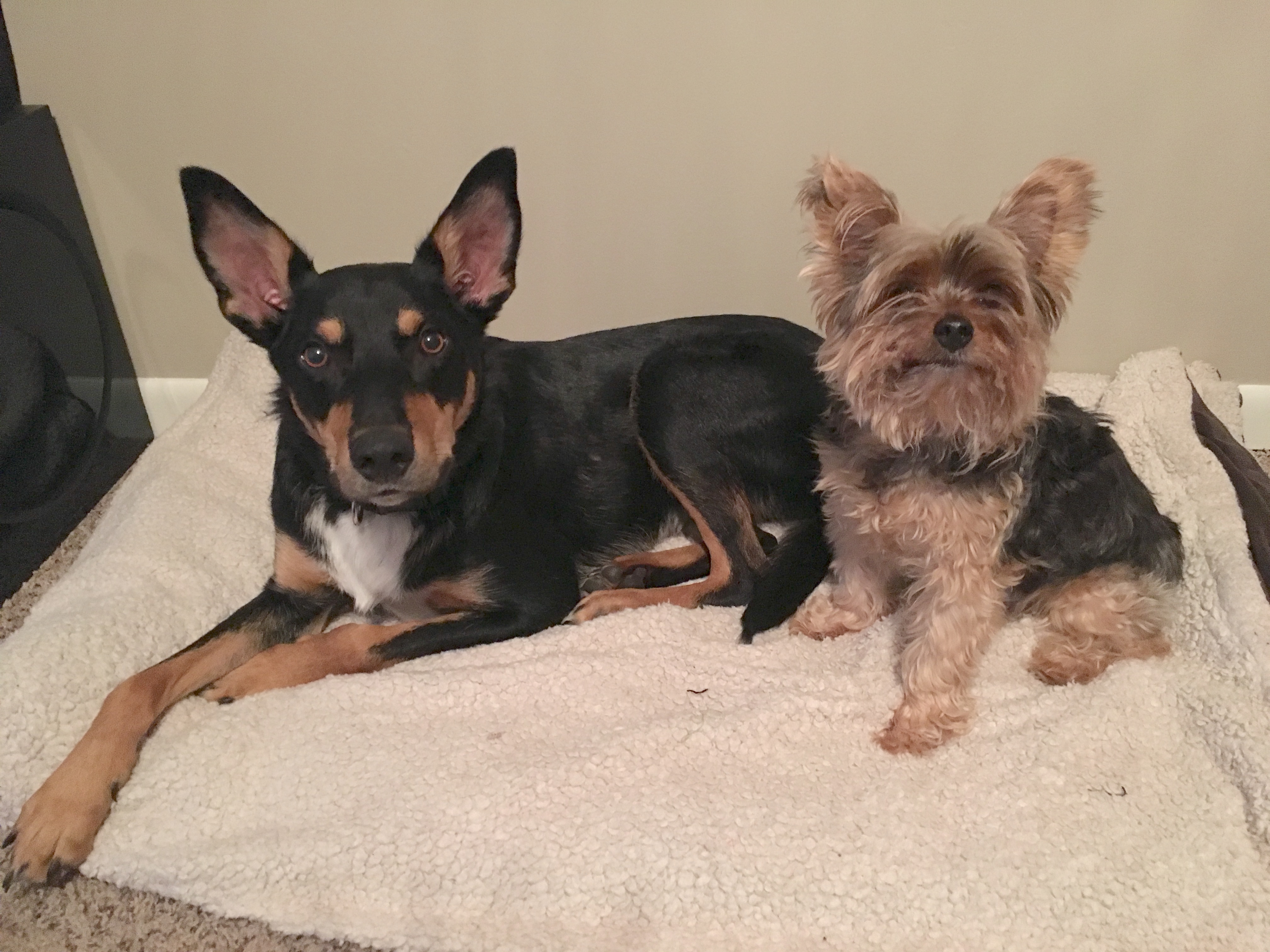
Rocky is a one-year-old Kelpie who was rescued off a reservation after being starved, burned and subjected to other forms of abuse. Now she lives in a safe home in Omaha with Mister O’Malley, a six-year-old Yorkie rescued from a puppy mill. Their guardian set up a dog behavior training session with me to help Rocky get over his fear of the kennel, Separation Anxiety and both dogs being a little cautious when meeting new people.
I was expecting the dogs to be fearful or trepidatious when I arrived for the session. I have to say that the response I got when I arrived for the appointment caught me by surprise.
Aside from the jumping up, the dog’s behavior was great. A little excited, but far from the worst cases I have seen and much better than fearful.
I sat down with the dogs and their guardians to observe how they interacted with one another. I noticed that they didn’t show much respect for human’s personal space (mostly Rocky) and demanded attention.
This is likely due to all the love and caring the guardian showered on the dogs which is understandable considering both of their backgrounds. Its important to help an abused dog feel safe and loved to help them come back to the light.
But once a dog is back to good mental health, showering it with unconditional love can cause a dog to start to think that they are peers with their humans. This can make them feel that they need to play a part in the leadership roles which can add stress and anxiety. Its possible that this is related to the reason that Rocky suffers from Separation Anxiety.
I suggested that the guardians start to pet the dogs with a purpose. By adding a tiny bit of structure so the dog thinks it needs to ask for attention instead of telling the human to pet them can help a dog adopt more of a follower mindset. Because followers are not responsible for security, protection, etc, this is a great way to reduce stress for the dog.
I knew that building up control would go a long way towards helping with Rocky’s Separation Anxiety so I suggested the guardian look for opportunities to incorporate some delayed gratification.
Asking the dog to wait before getting something they want can help them develop more self control. I like to add this sort of delay to regular daily activities that will be repeated over and over thousands of times for the dog’s life. Once the human gets into a habit of asking for a short pause, they do it without thinking. But each time they do, they help the dog with a mini dog behavior training session without even intending to do so.
A great skill that requires a dog to exhibit self control is training a dog to stay so I spent a few minutes explaining how to do so in the video below.
Ive found many people train dogs to stay incompletely. They try to do everything at once which makes things more difficult and can cause the dog to loose interest or th human to become frustrated. The best dog trainer know the trick to training a dog to stay is to break it into three stages; duration, distance then distractions.
By working on one stage at a time, we can put the dog into a position to succeed and make it easier for them to learn. Humans do this, so it is only logical we incorporate this method when training dogs.
Next I wanted to do some kennel training with Rocky so we headed into the basement.
I was happy to see that Rocky’s fear of the kennel wasn’t as intense as I thought it was. Many dogs with this problem wont go anywhere near the kennel but Rocky was walking in calmly within minutes.
By adding positive reinforcement to crate training, we can help a dog start to look at the kennel as a good or safe place. It will take some practice and a lot of treats, but Im sure Rocky will get over his fear of the crate with his guardians using this method.
Now that we had the technique down, I spent a few minutes going over the next steps that the guardians will need to take to help the dog get over the fear of the kennel for good.
After going over the instructions, I had the guardians practice the technique themselves so that I could make sure that they had it down pat. The mom was a little tentative initially, but she improved really quickly and had Rocky laying down in the kennel calmly in minutes.
Next up was our main man Chase who I have to thank for helping shoot some of the videos you have been watching. Chase is a true animal lover and has a good touch.
I didn’t have to really offer any advice because Chase had paid such great attention. Normally I don’t show my client’s faces, but Chase said he wanted to be on youtube and now he is, lol.
It was great to see how well Rocky responded and how well the humans picked up the techniques and tips. In fact I started thinking that I better get out of there shortly after we wrapped up the kennel training before Chase puts me out of business, lol.
Rocky is a great dog, I just think he was a little confused as to his position in the family. Now that the humans know how to help him get over his fears and communicate with him in a way he understands and respects, it shouldn’t be long before his problems are a thing of the past.
ROADMAP to SUCCESS
- Avoid petting Rocky when over excited or any other unbalanced state.
- Pet Rocky with a purpose as much as possible.
- Remember to correct or reward the dogs within 3 second max.
- Introduce rules and boundaries and enforce them consistently for the next three weeks to develop a new habit.
Use the non verbal Escalating Consequences to disagree with unwanted behavior. - Look for ways to delay permission or gratification to help Rocky develop more self control.
- Practice the Stay exercise in short training sprints multiple times a day; progressing from duration to distance to distraction only after Rocky is successful 5 times in a row.
- Practice the kennel training exercise as much as possible while gradually increasing the length of time Rocky stays in the kennel.
Categorized in: Dog Behavior