
Free Loose Leash Walking Tips: Training a High-Energy Lab
By: David Codr
Published Date: July 23, 2018
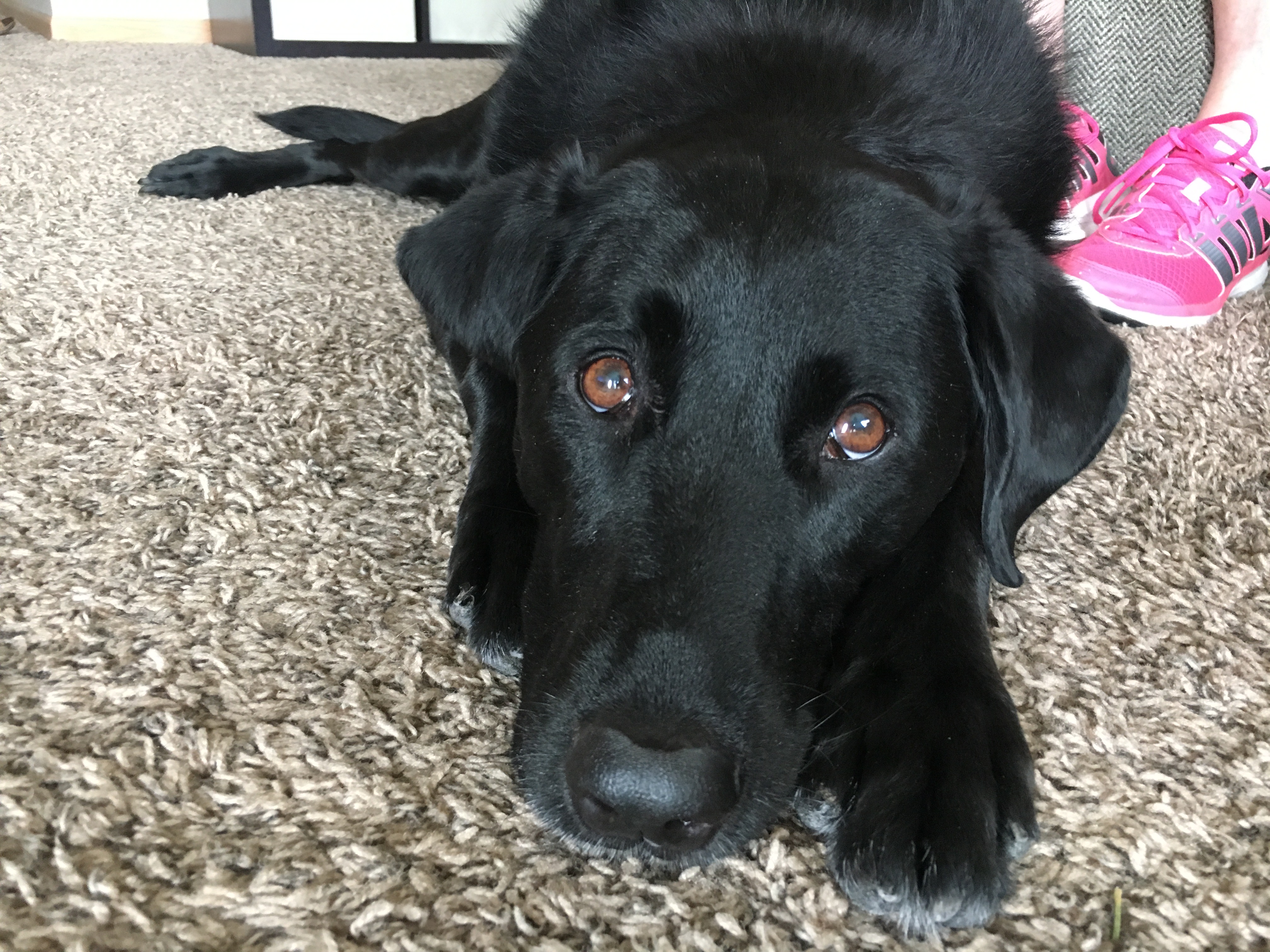
For this Omaha dog training session we worked with 7 year-old Black Lab mix Riley. Riley gets over excited at times, doesn’t always listen, and pulls on the leash. We shared a number of loose leash walking tips to help this behavior.
Riley’s guardian’s daughter recently adopted him after he passed away. Then the family moved into a new apartment. A lot of change at once can affect a dog’s behavior. Most dogs thrive with structure and predictability.
How to Train a High-Energy Lab
We started the session off by covering a number of common mistakes that people make with dogs. When rehabilitating a dog, you need to think about how and when to pet them. You should also use command words, provide exercise, create structure, and handle maintenance.
A big reason I can help most clients in one session is that I highlight common mistakes. These mistakes often lead to their problems, and I also offer solutions. This way the human attacks the problem at both ends which results in much quicker progress.
As we finished our talk about common mistakes, I shared some tips on dog behavior. These tips can help with new issues, like Riley barking at anyone who walks by the apartment windows.
How to Stop Pulling a Lab on Walks
“Pulling a Lab” means dragging a Labrador down the sidewalk during a walk. This is common for this strong and energetic breed.
Labs are full of energy and have a natural instinct to retrieve. Because of this, leash pulling is common at first. The good news is, with some consistent training and a bit of patience, you can definitely work on this.
Start by teaching your Lab to walk on a loose leash. One easy method is to stop walking whenever the leash gets tight, and only move forward again once it loosens.
Reward them with treats and praise when they walk nicely beside you. Don’t be afraid to change directions during the walk. This helps them stay focused on you instead of what is ahead.
It also helps to slowly get them used to the leash and walking near distractions. Short, calm walks can lead to success.
Make sure your Lab is getting enough physical and mental exercise too. A tired Lab is much less likely to be a pulling machine. Games like fetch, swimming, and structured retrieval tap into their natural instincts. These activities can help burn off extra energy.
Most importantly, be consistent with whatever training approach you choose—and give it time. Leash training doesn’t change things overnight, but stick with it and you’ll see real progress. Celebrate the small wins—they add up!
Easy Loose Leash Walking Tips
Next, I handed my camera to one of his guardians so that I could cover a number of loose leash walking tips to help the dog behave better on walks and stop pulling on the leash.
Leash pulling is a common problem. It happens because dogs have a natural instinct to pull against pressure. Pulling back on the leash often worsens the behavior, so the training emphasized teaching Riley to make better choices.
Key techniques included using a clicker to mark good behaviors. We rewarded Riley for staying by the guardian’s side. They also encouraged him to walk without pulling on the leash.
Exercises included using treats to prime the clicker. We used treats to lure Riley back into position when he pulled ahead. We practiced in short loops to help him learn which side to walk on.
We also suggest practicing in quiet places, like calm apartment buildings or dog-friendly stores. Keep sessions short, regular, and positive.
Building these habits slowly and patiently helps dogs stay interested. It teaches them where to be during walks. It also connects training with fun and rewards.
After going over these helpful dog training tips to stop leash pulling, we went outside. I wanted to coach his guardian as she practiced.
Riley showed some dog reactivity when a few other dogs in the complex came out to do some business. I’m hoping that the addition of structure in the home will help Riley feel more relaxed and stop his aggressive behavior towards other dogs.
If Riley is still reactive to leashes and dogs a month after the session, the guardians should call us. They can set up a one-hour follow-up session or a Loose Leash Walking session to address this specific issue.
To help the guardians remember all of the dog behaviorist tricks and secrets I shared in this in-home dog training session, we shot a roadmap to success video that you can check out below.
Want to Learn More Loose Leash Walking Tips to Stop Leash Pulling? Click Here to Book a SessionCategorized in: Dog Behavior