


Helping an Insecure Dog Stop Acting Aggressive Around New People
By: David Codr
Published Date: June 28, 2018
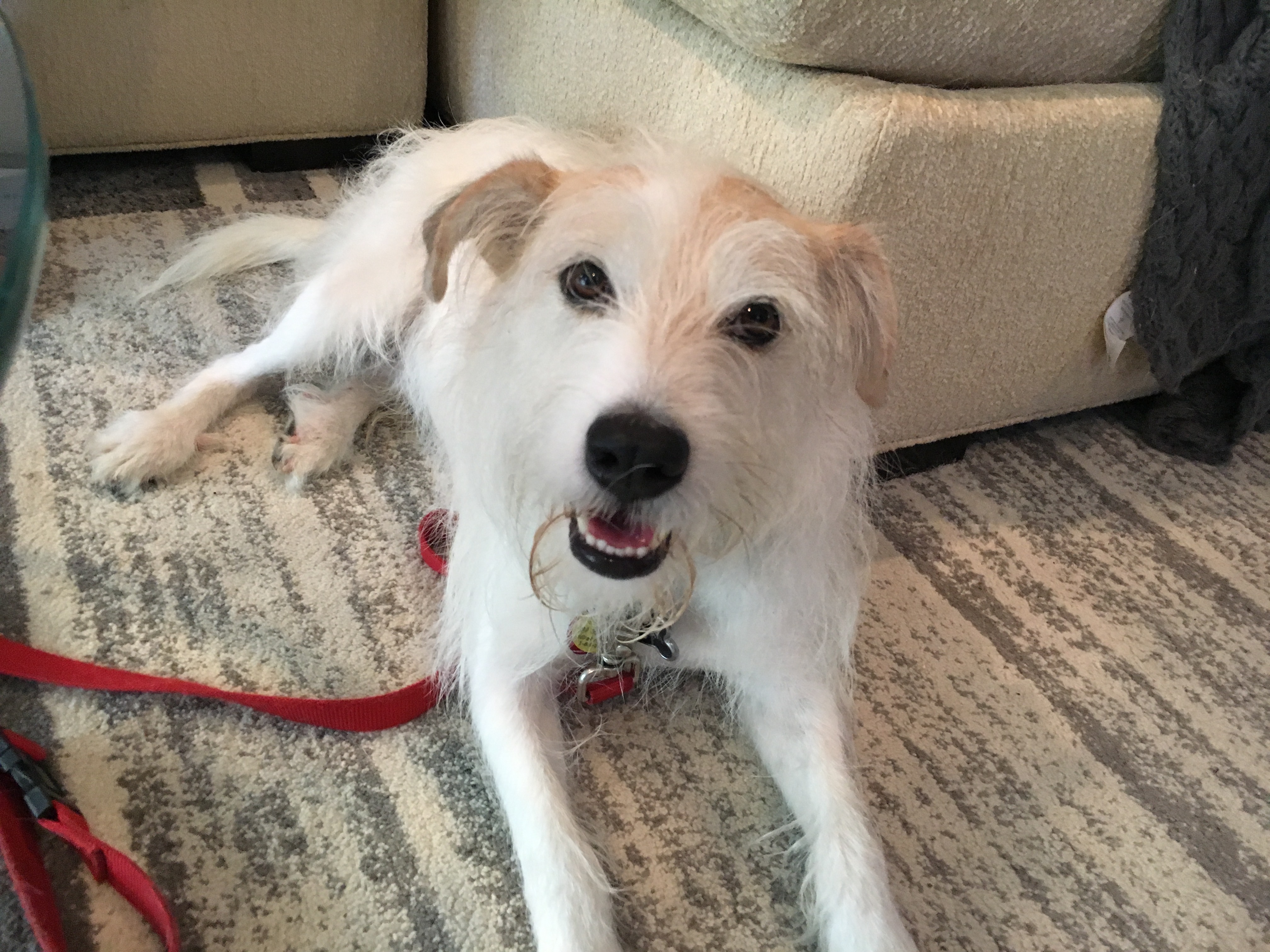
In this Omaha dog training session with 3 year-old Jack Russell mix Murray we shared tips to help fearful dogs who lash out at people by acting aggressive or nipping to keep them away.
Knowing that Murray was insecure, submissive and reactive, I used a very measured approach for the greeting.
Murray was barking and pacing around the doorway but keeping his distance. The Guardian started to move towards the door to open it but I waved him off. Murray was far too excited at that moment to continue. Anytime you have an over excited dog, stopping and waiting for the dog to settle down before moving on is always a great strategy.
Once Murray had settled down, I opened the door tossed in a few high-value treats, then immediately closed the door. At first Murray was still too worked up to take the treats so we took our time and waited. When he settle down, I had his guardian pick up the treats and hand them to the dog at which point Murray ate them.
Once Murray settled down again, I opened the door and inserted my knee. I waited until Murray was comfortable enough to come over and give it a few sniffs. After he finished sniffing me, I had his guardian put him on a leash and walk outside the front door with the dog.
I took Murray’s leash and we went for a short walk around the neighborhood. The open space can help dogs feel more comfortable and relaxed and the added stimulation of the sights, sounds and smells of being outside are great distractions. But the most important thing is having the dog moving forward. Dogs get over things by literally moving forward, so incorporating that element in certain situations is an effective dog behaviorist trick.
On the walk, I let Murray walk wherever he wanted to go and when we got to the halfway point, I grabbed a seat in a shaded area and fed him some treats by hand. By the time that we returned to his home, Murray was feeling calm and confident around me.
I summarized this approach to help a fearful dog feel more calm and comfortable around new people in the video below.
Stopping a fearful dog from acting aggressive is a very rewarding session for me as I know its going to be such a huge improvement in the dog and human’s quality of life.
While Murray acts aggressive to guests and new people, I don’t believe Murray is an aggressive dog. I think he is stressed out, insecure and confused as to his position in the home. Just like humans, a stressed out dog is more prone to making mistakes than one who is calm and confident.
A large contributing factor was Murray’s low self esteem. He didn’t really know any commands which makes it hard for any dog to feel confident about anything. Just like humans, dogs health self-esteem that comes from mastering new skills. To help build up Marie‘s confidence I suggested that his guardian start teaching him a new trick or command every week for the next 8 to 12 weeks. Teaching him how to sit, lay down, sit up, stand up or focus on his face on command are great ways to redirect his attention before he gets into trouble and build up his self esteem.
Next I spent about an hour going over the importance of rules and structure so that Murray can start to see his human acting as a leader, at least from the dogs perspective.
Help the human stop petting and interacting with the dog when it was in an unbalanced state of mind, I shared my Petting with a purpose and Passive training philosophies with him. These are great ways to use positive reinforcement to help a dog learn and repeat the behaviors that the human wants to see them engage in.
I started going through the escalating consequences that I used to disagree with unwanted behaviors or enforce boundaries when one of the guardians friends arrived to help us out.
Marie had demonstrated strong reactive behaviors towards this friend when she had visited in the past. Making matters more challenging, this person was very anxious about Marie and thought that he was an aggressive dog who was going to bite her.
I stepped outside and showed the friend how to re-create the door greeting that I had used a few hours earlier to great success. Friends hand was shaking so much when she attempted to throw the treats inside the door that it took her three tries. We waited for him to settle down again and then headed off for a walk.
When we got to the halfway part of the walk and took a seat in the shade, Marie and the friend were much more relaxed than they were before. Within a minute of sitting down, she was handing him treats that he was looking up tenderly offer for rent without any signs of any insecurity or reactivity.
The friend kept on remarking she couldn’t believe that she was walking the dog, sitting next to the dog or that he was taking treats from her hand.
On the way back to his home, Marie started to get excited and pull a bit on the leash. Each time he did this I instructed the friend to stop and wait for him to settle down before continuing. This was a great opportunity for Marie to learn how to develop some self-control.
When we returned to Marie’s home, we all grab the seat on the couch and chatted for a few minutes about what we accomplished.
Unfortunately when the friend got up to move around, we had one tiny step back where Marie growled and then nipped her leg when she turned away from him. I believe that this interaction was a result of Marie being tired from the three hour session, not being practiced at this new good behavior and the guardian standing and then turning so she was offering her back to him. Many insecure dogs will need help when people they disagree with offer them their rear.
I was pretty disappointed in myself as the friend immediately left after the nipping incident. In retrospect I would’ve liked to have had her take him out for another short walk so that the last experience both of them had was a positive one.
While the friend was a little bit shook up by Marie’s reaction at the end of our encounter, I hope that she will reflect on how much progress we made and all the positive interaction she had with the dog which were all firsts for her and him.
It’s going to be crucially important for Marie’s guardian to arrange to have a handful of visitors come to his house each week for the next 2 to 4 weeks to help Marie start learning and practicing new behaviors as well as building a positive associations to people who visit. Combined with adding structure, rewarding desired behaviors and teaching Marie some new tricks and commands, Marie’s days of acting like a security dog should quickly become a thing of the past.
Because of the anxiety of the friend and her interaction with Marie at the end of her visit, I’m guessing we will need to set up a follow-up session in about a month to build on the success that we had end this time complete the visit without any naps or other unwanted behaviors.
Help the guardian remember all of the positive dog training tips we covered in this in home dog training session, we shot a roadmap to success video that you can check out below.
Categorized in: Dog Psychology